Gas Based Fire Suppression System
Gas-Based Fire Suppression System
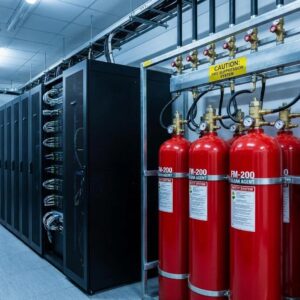
A Gas-Based Fire Suppression System is an elite, automated life-safety solution engineered to extinguish fires instantly by discharging clean, residue-free extinguishing agents into enclosed spaces. Designed specifically for mission-critical facilities, it eliminates fire threats rapidly without risking water damage to sensitive electronics, server racks, or valuable assets.
Sequence of Operation
A synchronized multi-step workflow guarantees reliable activation and maximum occupant safety:
1. Detection & Verification
Smoke or heat detectors trigger the Fire Alarm Control Panel (FACP) to verify the threat.
2. Pre-Discharge Alert
Audio-visual alarms activate to allow immediate personnel evacuation within a safe timeframe.
3. Controlled Release
Following a 20–30 second delay, the clean agent is injected via distribution piping and nozzles.
4. Suppression & Holding
Agent reduces oxygen/absorbs heat. The room remains sealed for ~10 minutes to prevent re-ignition.
Core System Components
Every deployment integrates heavy-duty hardware engineered for absolute reliability:
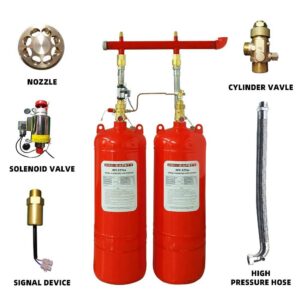
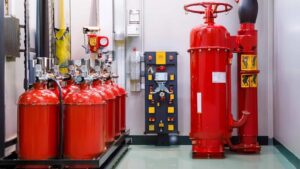
- Gas Storage Cylinders
- Cylinder Valves & Actuators
- Distribution Piping Networks
- Precision Discharge Nozzles
- Fire Alarm Control Panel (FACP)
- Smoke & Heat Detectors
- Manual Release Stations
- Abort Switches
- Pressure Switches
- Sounders & Optical Flashers
- Warning Signage Arrays
- Door Fan Test Assemblies
Mission-Critical Protection for High-Value Assets
Safeguard your data centers, control rooms, and infrastructure with advanced, residue-free gas suppression solutions engineered for total compliance and safety. Contact our engineering team today for design and installation inquiries.
Service Features