Airports
Smart terminal infrastructures optimize operational flow and passenger experience.
Managing Complexity in Next-Generation Aviation Facilities
Global air travel demands continue to grow rapidly. Today, airport authorities face simultaneous challenges: handling higher passenger traffic, adhering to strict energy efficiency and net-zero targets, satisfying stringent regulatory standards, and securing both physical and digital environments against emerging threats.
To maintain continuous terminal, runway, and support operations, modern facilities require unified building platforms that seamlessly integrate thermal management, access security, fire protection, and automated controls.
Centralized Building Automation & Control
Unify HVAC, lighting, energy, and mechanical infrastructure into a single operational interface. Predictive diagnostics and real-time telemetry minimize system outages and optimize energy usage across expansive airport facilities.

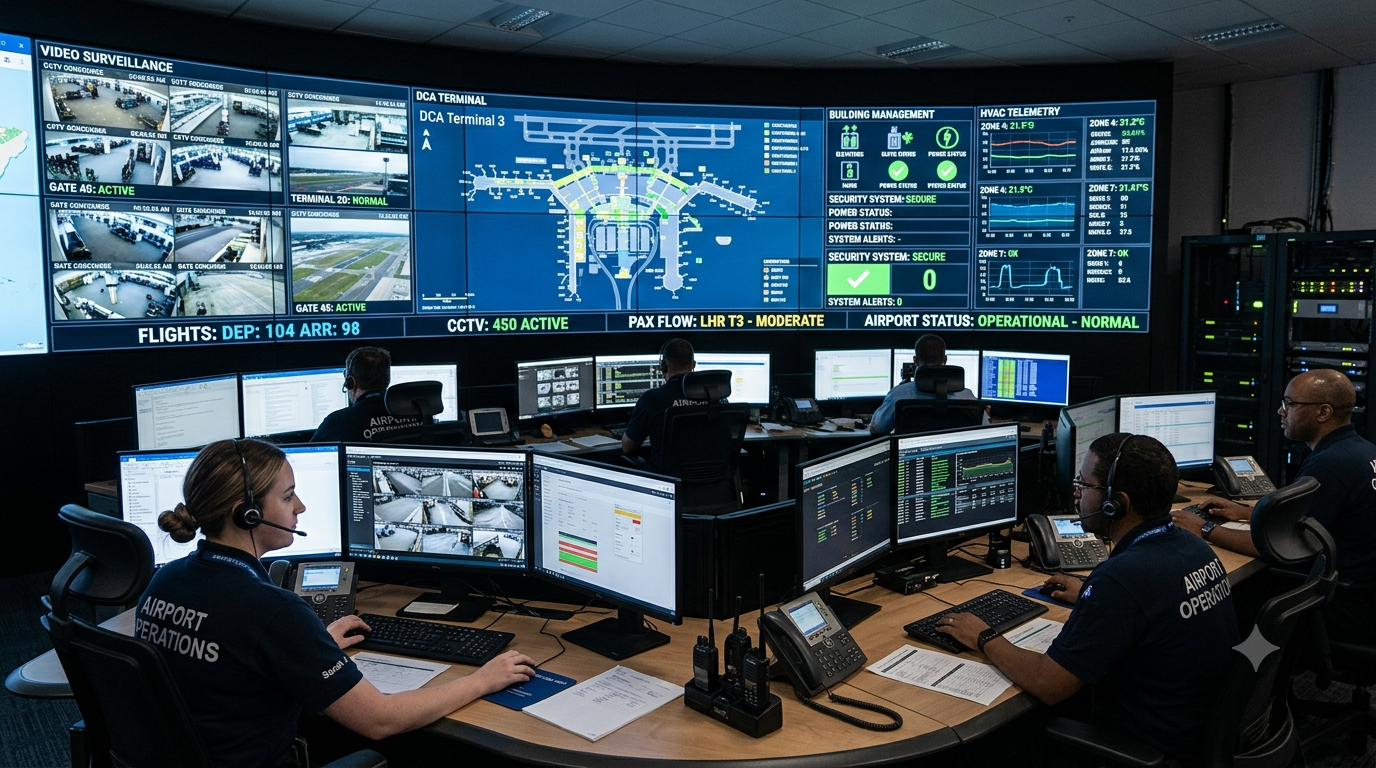
Integrated control centers provide site-wide visibility and real-time status reporting.
Aviation Security & Integrated Life Safety
Protect passengers, crew, and restricted terminal areas using multi-layer access control systems, AI-enabled video surveillance, biometric verification, and high-efficiency fire suppression designed for large concourses and hangars.
Automated biometric access checkpoints ensure seamless travel security compliance.
Enhancing Indoor Air Quality & Passenger Comfort
Deliver superior indoor environmental quality (IAQ) throughout gates, retail concourses, and waiting lounges. Smart climate controls continuously adjust air flow, humidity, and temperature based on crowd density and outdoor weather conditions.
Optimized indoor climates elevate passenger satisfaction during dwell times.
Key Airport Outcomes
Operational Continuity
Prevent unplanned downtime through predictive equipment analytics and continuous health monitoring.
Holistic Physical Security
Safeguard airside and landside operations using unified surveillance, analytics, and perimeter control.
Sustainability & Energy Savings
Lower greenhouse emissions and operational overhead with automated energy management strategies.
Transform Your Airport Facility Operations
Partner with our aviation specialists to engineer, deploy, and maintain intelligent airport building infrastructures.
Solution Features